One remote instead of five
The test is not whether you can operate the room. It is whether somebody who does not live there can.
September 7, 2026 · 3 min read
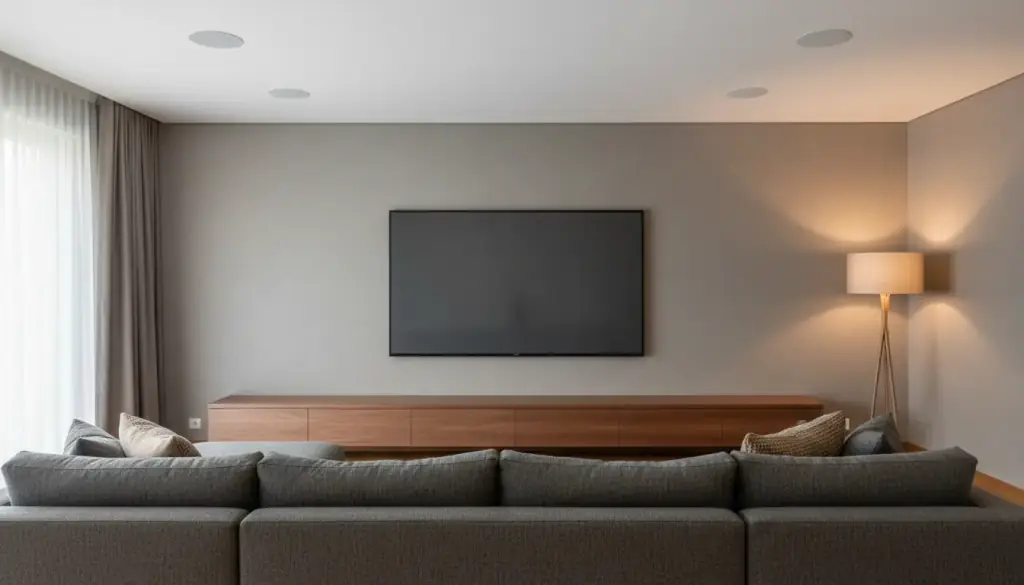
There is a particular kind of household where one person can work the television and nobody else can. There is a sequence, and it involves two or three remotes and switching to the correct input, and the person who knows it is not always in the room. Everybody else gives up and looks at their phone.
That is the problem universal remote programming solves, and it is worth being precise about what it does and does not do.
Why the sequence exists at all
Every box in an entertainment setup is its own island. The television, the source devices and any audio equipment each have their own remote and their own idea of what state they are in. Watching something means several devices being on, set to the right input, and set to the right volume, in a particular order.
None of these devices was designed with the others in mind, so the coordination falls to whoever is holding the remotes. Learning the sequence is not hard. Remembering it when you have not done it for a fortnight is where it falls apart.
What a programmed remote actually does
A universal remote is not simply one remote with all the buttons. The useful part is that it is programmed around activities rather than devices. Instead of a button for the television and a button for the source, there is a button for what you want to do, and pressing it puts every device into the state that activity requires.
That is where the work is. Getting a remote to control several devices is the straightforward half. Working out every activity the household actually does, and what each device has to be doing for it, is the half that decides whether the room is genuinely easier to use or just differently confusing.
5E Communications custom programs URC and other universal remote systems for entertainment centers and home theaters, so several remotes come down to one and anybody in the family can press a button and get to what they want.
The test that matters
A good way to judge the result is to hand the remote to somebody who does not live in the house and say nothing. If they can sit down and watch something, the programming is right. If they have to be told anything at all, it is not finished.
That standard sounds strict and it is the whole point. The reason the original pile of remotes failed was never that there were too many buttons. It was that the room required knowledge to operate.
Where automation fits, and where it does not
The same thinking extends past the television. With compatible equipment, an Amazon Echo can be installed through a home so lighting or heating and cooling respond to your voice, and URC automation can do similar things from the same remote or keypad that runs the entertainment.
It is worth being level-headed about this. Voice control of the lights is genuinely useful in specific spots, such as a room you walk into with your hands full, or a lamp on the far side of a bedroom. It is much less useful as a replacement for a switch that was already within reach and always worked.
The word doing the work in that paragraph is compatible. Whether any of this is straightforward depends entirely on what equipment is already in the house, and that is a question to settle before buying anything rather than after.
Questions worth asking first
- What does everybody in the house actually do in this room, including the person who uses it least?
- Which existing equipment can be controlled, and which of it is going to have to be replaced for any of this to work?
- What happens when one device is replaced later, and who reprograms it?
- Is there anything here that is genuinely better than a wall switch, and is it worth doing the rest?
The version of this that keeps working
The setups that survive are the ones built around how a household really behaves rather than around what the equipment is capable of. A room with three activity buttons that always work beats a room that can theoretically do anything but that only one person can drive.
5E Communications has been installing home theater, audio and video cabling and universal remote systems across the Texas Panhandle out of a shop in Amarillo since 2006. If your coffee table has four remotes on it, call (806) 674-6900 and describe the room.
5E Communications, (806) 674-6900
Call (806) 674-6900More articles
Why one wired drop still beats a better router
Most people try to fix a slow room by buying a bigger router. Sometimes that works. Often the room just needed a wire.
What actually happens when an office moves to a cloud phone system
The pitch is usually about features. The part that changes your week is much simpler than that.